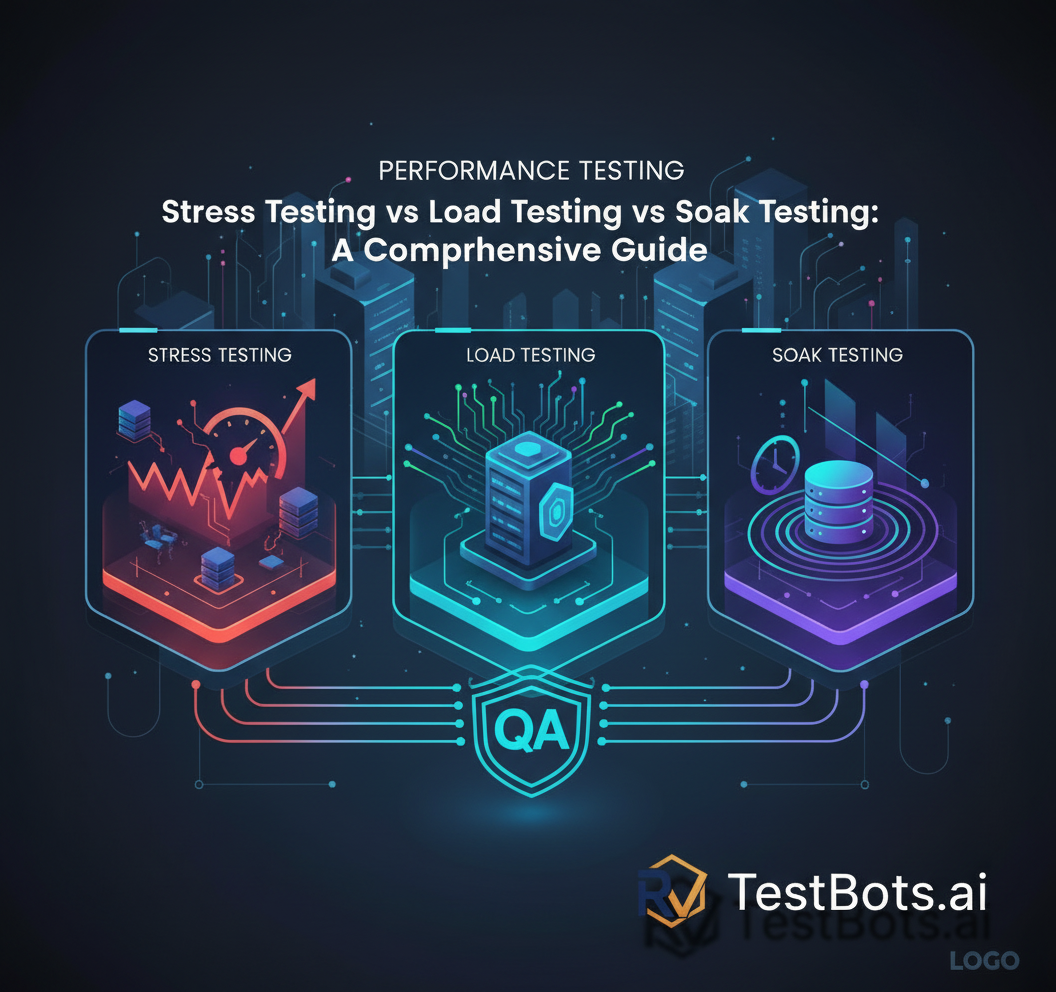
In the rapidly evolving software landscape , ensuring application performance and reliability is paramount. This guide demystifies stress testing, load testing, and soak testing, explaining their unique objectives, methodologies, and when to apply each for a resilient system.
In the dynamic software development world , where user expectations for seamless performance are at an all-time high, understanding the nuances of performance testing is no longer optional—it's foundational. Often, the terms stress testing vs load testing vs soak testing are used interchangeably, leading to confusion and, more critically, inadequate testing strategies. This can result in system failures, poor user experience, and significant financial losses. As quality assurance professionals, distinguishing these crucial performance testing types is essential for building robust, scalable, and reliable applications that can withstand real-world demands.
The global market for application performance management is projected to reach over $10 billion underscoring the critical need for effective performance testing. Incorrectly applying these techniques can leave critical vulnerabilities undiscovered, leading to catastrophic outages when systems are live. Let's dive deep into each methodology, clarifying their distinct purposes and best practices to ensure your applications are future-proof.
Understanding Load Testing: Simulating Expected Traffic
Load testing is perhaps the most commonly understood form of performance testing. Its primary objective is to verify an application's behavior under an expected, normal, and peak user load. Think of it as preparing your application for its busiest day, ensuring it can handle the anticipated volume of users and transactions without degrading performance.
What is Load Testing?
Load testing involves subjecting a system to a specific number of concurrent users or requests over a defined period. The goal is to measure response times, resource utilization (CPU, memory, network I/O), and throughput under these conditions. It helps identify bottlenecks in the application, database, or infrastructure that emerge when the system is operating at its designed capacity.
"Today, with the average web page loading time expected to be under 2 seconds for optimal user engagement, load testing is indispensable for meeting these stringent performance benchmarks." - ZDNet
Key Objectives of Load Testing:
- Validate Performance under Normal & Peak Loads: Ensure the application performs acceptably when many users are accessing it simultaneously.
- Identify Performance Bottlenecks: Pinpoint specific components (e.g., database queries, API endpoints, server configurations) that slow down under load.
- Determine System Scalability: Understand how the system behaves as the load increases and identify the point at which performance starts to degrade.
- Measure Response Times: Evaluate how quickly the system responds to user requests under different load levels.
- Monitor Resource Utilization: Track CPU, memory, disk I/O, and network usage to ensure they are within acceptable limits.
When to Perform Load Testing:
Load testing should be an integral part of your continuous integration/continuous delivery (CI/CD) pipeline, especially before major releases or anticipated traffic spikes (e.g., holiday sales, marketing campaigns). It's crucial after any significant application changes, infrastructure upgrades, or architectural shifts.
Tools like TestBots.ai's AI Test Studio can greatly simplify the creation and execution of sophisticated load test scenarios, allowing QA teams to focus on analysis rather than script development.
Stress Testing: Pushing Beyond the Limits
While load testing assesses performance under expected conditions, stress testing takes it a step further. It aims to evaluate the system's robustness and error handling capabilities under extreme, often unsustainable, conditions. The objective is to find the 'breaking point' of the application.
What is Stress Testing?
Stress testing involves subjecting the application to loads significantly beyond its normal operational capacity. This could mean a sudden, massive influx of users, a sustained very high load, or even simulating resource starvation (e.g., limiting available memory or CPU). The focus isn't just on performance degradation but on how the system fails, if it recovers gracefully, and whether data integrity is maintained during and after failure.
"Identifying system breaking points through stress testing is critical for disaster recovery planning and ensuring business continuity in an increasingly digital world." - IEEE
Key Objectives of Stress Testing:
- Determine Breaking Point: Discover the maximum capacity a system can handle before exhibiting unacceptable behavior or failing.
- Evaluate Error Handling & Recovery: Assess how the system handles errors under extreme stress, whether it recovers gracefully, and if data corruption occurs.
- Identify Security Vulnerabilities: Sometimes, systems under stress can expose security flaws or allow unauthorized access.
- Test Stability & Resilience: Ensure the system remains stable and responsive even when pushed to its limits.
- Verify Scalability Mechanisms: If auto-scaling is enabled, stress testing verifies if new instances spin up effectively to handle the load.
When to Perform Stress Testing:
Stress testing is vital before launching mission-critical applications, especially those with anticipated high traffic or sensitive data. It should also be performed after major architectural changes, infrastructure migrations, or when preparing for events that could cause unexpected traffic surges. It's a proactive measure to prevent catastrophic failures and understand your system's true limits.
Soak Testing (Endurance Testing): The Long Haul
Often overlooked, soak testing, also known as endurance testing, focuses on the system's stability and performance over an extended period under a sustained, typical, or slightly above typical load. Unlike load or stress testing which are concerned with peak performance or breaking points, soak testing looks for issues that only manifest after hours or even days of continuous operation.
What is Soak Testing?
Soak testing involves running the application with a moderate, but consistent, load for a very long duration—typically 24, 48, or even 72+ hours. The objective is to detect memory leaks, database connection pool exhaustion, resource handle leaks, and other performance degradations that accumulate over time. These issues are often subtle and won't appear during shorter load or stress tests.
Key Objectives of Soak Testing:
- Identify Memory Leaks: Detect gradual memory consumption that eventually leads to application crashes or slow performance.
- Discover Resource Exhaustion: Uncover issues like database connection pool exhaustion, file handle leaks, or thread pool depletion.
- Verify System Stability: Ensure the application remains responsive and performs consistently over extended periods.
- Examine Database Performance: Observe how database performance evolves over time with continuous transactions.
- Evaluate Logging & Monitoring Systems: Ensure these systems can handle sustained activity without impacting application performance.
When to Perform Soak Testing:
Soak testing is critical for applications designed for continuous operation, such as enterprise systems, financial platforms, or SaaS applications. It should be performed after major releases and whenever potential memory or resource management issues are suspected. While it requires a longer commitment of resources, the insights gained are invaluable for long-term system health.
Comparing Stress Testing vs Load Testing vs Soak Testing: A Quick Reference
To summarize the distinctions, here's a comparative overview:
- Load Testing:
- Purpose: Measure performance under expected and peak user loads.
- Load Level: Normal to slightly above normal.
- Duration: Short to moderate (minutes to a few hours).
- Goal: Identify bottlenecks, ensure SLAs are met.
- Stress Testing:
- Purpose: Determine system's breaking point and error handling under extreme conditions.
- Load Level: Beyond normal capacity, often unsustainable.
- Duration: Relatively short (minutes).
- Goal: Evaluate stability, resilience, and recovery mechanisms.
- Soak Testing (Endurance Testing):
- Purpose: Verify stability and performance over extended periods.
- Load Level: Normal to moderate, sustained.
- Duration: Long (hours to days).
- Goal: Detect memory leaks, resource exhaustion, and gradual performance degradation.
Best Practices for Effective Performance Testing
Regardless of whether you're performing load, stress, or soak testing, a few best practices will maximize your efforts:
- Define Clear Objectives: Before starting, clearly articulate what you want to achieve with each test type. Are you looking for baseline performance, breaking points, or long-term stability?
- Realistic Test Data & Scenarios: Use test data that closely mimics production data and user behavior. Generic data often fails to expose real-world problems. Tools like TestBots.ai's Test Data Generator can be invaluable here.
- Monitor Everything: Beyond just response times, monitor server metrics (CPU, RAM, disk I/O, network), database performance, and application-specific metrics.
- Isolate the Test Environment: Ensure your performance tests run on an environment that is as close to production as possible, and that it's isolated from other activities to avoid skewed results.
- Automate, Automate, Automate: Manual performance testing is inefficient and prone to errors. Leverage automation tools to run tests consistently and integrate them into your CI/CD pipeline. The Test Script Recorder from TestBots.ai simplifies test case creation.
- Analyze Results Thoroughly: Don't just run tests; analyze the data. Look for trends, anomalies, and correlations between load, resource utilization, and performance metrics.
- Iterate and Refine: Performance testing is not a one-time event. It's an ongoing process. Use the insights from one test to improve the system and then re-test.
- Collaborate Across Teams: Performance issues often span development, operations, and QA. Foster cross-functional collaboration to diagnose and resolve problems effectively.
The insights from the Ministry of Testing and Google's Testing Blog consistently highlight the importance of these practices for mature QA organizations.
Conclusion: Building Resilient Software with TestBots.ai
In the competitive landscape , where application performance directly impacts user satisfaction and business success, a clear understanding of stress testing vs load testing vs soak testing is indispensable for every QA professional and development team. Each method serves a unique purpose, and their combined application provides a holistic view of your system's capabilities and vulnerabilities.
By systematically applying load, stress, and soak testing, you can proactively identify and address performance bottlenecks, ensure graceful failure, and guarantee long-term stability, ultimately delivering a superior user experience. At TestBots.ai, we empower quality engineering professionals with advanced, AI-driven tools designed to streamline these complex testing processes. Our platform helps you create, execute, and analyze performance tests with unprecedented efficiency.
Ready to elevate your application's performance and reliability? Explore how TestBots.ai can transform your performance testing strategy. Visit our blog for more insights, or check out our comprehensive suite of free tools to get started today.

Sarah Mitchell
Performance testing expert specializing in large-scale distributed systems. Former lead at a Fortune 500 tech company.