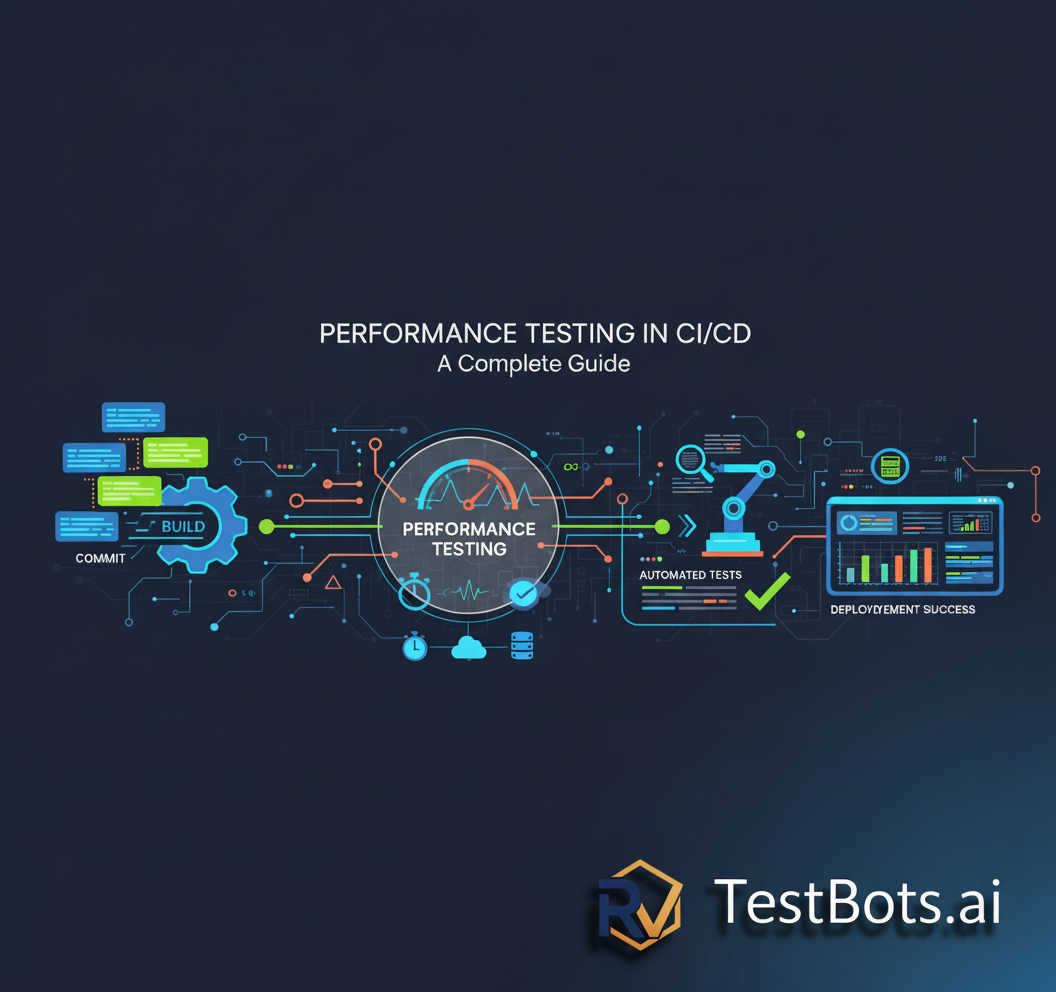
Integrating performance testing into CI/CD pipelines is no longer optional; it's a critical requirement for delivering high-quality, scalable software. This comprehensive guide explores how to embed performance testing effectively into your continuous integration and continuous delivery workflows, addressing common challenges and providing actionable solutions.
In the fast-paced world of software development, where continuous integration and continuous delivery (CI/CD) pipelines are the norm, the ability to deliver high-performing applications consistently is paramount. Organizations that neglect performance testing within their CI/CD pipelines risk slow user experiences, costly outages, and ultimately, a loss of competitive advantage. the expectation for instant, flawless digital experiences will only intensify, making the seamless integration of performance testing in CI/CD pipelines a non-negotiable aspect of quality engineering.
The traditional approach of conducting performance tests at the end of the development cycle is no longer viable. It introduces significant delays, uncovers issues too late, and makes remediation expensive and time-consuming. Instead, a 'shift-left' approach, where performance testing is an integral part of every stage of the CI/CD pipeline, empowers teams to identify and resolve performance bottlenecks early, ensuring that every code commit contributes to a more robust and scalable application. This guide will walk you through the essential strategies, tools, and best practices to achieve this critical integration.
Why Performance Testing in CI/CD is Crucial
The digital landscape is evolving rapidly, with user expectations for speed and reliability at an all-time high. A study by Akamai indicates that a 2-second delay in load time can increase bounce rates by 103%. In an era dominated by cloud-native architectures, microservices, and AI-driven applications, performance issues can quickly cascade, leading to widespread system failures. Integrating performance testing into your CI/CD pipeline offers several key advantages:
- Early Detection of Performance Bottlenecks: Identifying issues like memory leaks, slow database queries, or inefficient algorithms early in the development cycle makes them cheaper and faster to fix.
- Preventing Performance Regressions: Automated performance tests with each build ensure that new code changes do not degrade existing performance metrics.
- Faster Feedback Loops: Developers receive immediate feedback on the performance impact of their code, allowing for quick adjustments.
- Improved System Stability and Scalability: Regular performance validation ensures the application can handle expected and peak load conditions.
- Reduced Release Risks: Confident releases with fewer surprises related to performance in production.
- Enhanced User Experience: Ultimately, a high-performing application leads to satisfied users and better business outcomes.
According to a forecast, the global market for application performance management (APM) is projected to reach over $10 billion underscoring the growing emphasis on application performance. Organizations that fail to adopt this integrated approach will find themselves lagging behind competitors who prioritize performance as a core quality attribute.
Key Strategies for Integrating Performance Testing into CI/CD Pipelines
Successful integration requires a well-thought-out strategy that encompasses tools, processes, and a cultural shift towards 'performance awareness' across the development team. Here are the core strategies:
1. Define Clear Performance Baselines and SLAs
Before you can measure performance, you need to know what 'good' looks like. Establish clear performance baselines for key metrics such as response time, throughput, error rates, and resource utilization. These baselines should be derived from production data, business requirements, and user expectations. Define Service Level Agreements (SLAs) and Service Level Objectives (SLOs) that performance tests must meet. These will serve as pass/fail criteria in your CI/CD pipeline.
2. Shift-Left Performance Testing: From Unit to Load
Embrace the shift-left philosophy by introducing performance considerations at every stage:
- Unit-Level Performance Tests: Developers can write micro-benchmarks for critical functions or algorithms to ensure optimal performance of individual code components.
- API Performance Tests: Test the performance of individual API endpoints under various load conditions. This is crucial for microservices architectures.
- Component-Level Performance Tests: Test the performance of integrated components before they are part of the full application.
- System Integration Performance Tests: Once components are integrated, run performance tests on the complete system to identify bottlenecks arising from interactions.
- Load and Stress Tests: Simulate realistic user loads and stress conditions to ensure the application remains stable and performs well under peak usage.
3. Automate Everything Possible
Manual performance testing has no place in a modern CI/CD pipeline. Automate the execution of performance test scripts, data generation, environment provisioning, and results analysis. Leverage tools that can be integrated seamlessly with your existing CI/CD platform (e.g., Jenkins, GitLab CI, Azure DevOps). For instance, TestBots.ai's AI Test Studio can significantly accelerate test script generation and execution, making automation more accessible.
4. Integrate Performance Gates into the Pipeline
Configure your CI/CD pipeline to include performance gates. These are automated checks that evaluate performance test results against predefined thresholds. If a build fails to meet the performance criteria, the pipeline should automatically halt, preventing performance regressions from moving further down the development cycle. This acts as a crucial quality gate.
5. Monitor and Analyze Performance Trends
Don't just run tests; analyze the results. Implement robust performance monitoring and reporting tools within your CI/CD pipeline. Track key performance indicators (KPIs) over time to identify trends, pinpoint performance degradations, and understand the impact of code changes. Visual dashboards help teams quickly grasp the performance health of the application. Consider using tools that offer historical data analysis to compare current performance against previous builds.
6. Realistic Test Environments and Data
To ensure your performance tests yield meaningful results, they must be executed in environments that closely mirror production. This includes infrastructure, network configurations, and especially, realistic test data. Generating representative test data can be a challenge; utilize tools like TestBots.ai's Test Data Generator to create diverse and relevant datasets for your performance scenarios.
Choosing the Right Tools for Performance Testing in CI/CD
A crucial aspect of successful integration is selecting the right set of tools that align with your technology stack and CI/CD ecosystem. Here are categories of tools to consider:
- Load Testing Tools:
- JMeter: Open-source, highly flexible, supports various protocols. Excellent for API and web application load testing.
- Gatling: Scala-based, code-centric, known for its high performance and clear reports.
- k6: Modern, developer-centric load testing tool with JavaScript APIs.
- LoadRunner/NeoLoad: Commercial tools offering comprehensive features for enterprise-level testing.
- APM (Application Performance Monitoring) Tools:
- Dynatrace, New Relic, AppDynamics: Provide deep insights into application performance, infrastructure, and user experience. Crucial for identifying root causes of performance issues.
- Prometheus & Grafana: Open-source alternatives for robust monitoring and visualization.
- CI/CD Platforms:
- Jenkins: Highly extensible, widely used for automating build, test, and deployment.
- GitLab CI/CD: Integrated within GitLab, offering seamless CI/CD capabilities.
- Azure DevOps Pipelines: Microsoft's offering for end-to-end CI/CD. TestBots.ai offers specific Azure DevOps Integration for enhanced test automation.
- GitHub Actions: Event-driven automation directly within GitHub repositories.
- Test Data Management Tools:
- Tools like TestBots.ai's Free Tools suite, including the Test Data Generator, can help create realistic and varied datasets for performance scenarios.
"Performance is not a feature; it's a quality attribute that defines user experience. Integrating performance testing into CI/CD is about building quality in, not testing it in at the end." - Ministry of Testing (ministryoftesting.com)
Best Practices for Sustainable Performance Testing in CI/CD
Beyond tools and strategies, adopting certain best practices ensures your performance testing efforts are sustainable and effective:
- Keep Tests Small and Focused: In early stages of the pipeline, run quick, targeted performance tests on specific components or APIs rather than full system load tests. This provides faster feedback.
- Version Control Your Performance Scripts: Treat performance test scripts like application code. Store them in version control (e.g., Git) alongside your application code, allowing for traceability and collaboration.
- Parameterize and Modularize Scripts: Make your scripts flexible by parameterizing variables like URLs, user credentials, and load levels. Modularize scripts for reusability and easier maintenance.
- Regularly Review and Maintain Tests: Performance tests can become outdated as the application evolves. Regularly review and update them to ensure they remain relevant and accurate.
- Educate and Empower the Team: Foster a culture where everyone, from developers to operations, understands the importance of performance. Provide training and resources.
- Start Small, Iterate, and Scale: Don't try to implement a full-blown performance testing suite overnight. Start with critical paths, automate basic tests, and gradually expand your coverage and complexity.
- Leverage Cloud for Scalability: Use cloud platforms for on-demand test environments and to generate large volumes of load without investing in expensive hardware.
- Integrate with Observability: Combine performance test results with real-time observability data from production. This provides a holistic view and helps validate test scenarios. (Martin Fowler on Testing Strategies)
Overcoming Common Challenges
While the benefits are clear, integrating performance testing into CI/CD pipelines comes with its share of challenges:
- Environment Provisioning: Setting up consistent, production-like test environments can be complex. Utilize Infrastructure as Code (IaC) tools like Terraform or Ansible to automate environment creation and tear-down.
- Test Data Management: Generating and managing realistic, non-sensitive test data is often a bottleneck. Invest in robust test data management strategies and tools.
- False Positives/Negatives: Poorly designed tests or unstable environments can lead to unreliable results. Focus on test stability and accuracy.
- Resource Constraints: Performance testing can be resource-intensive. Optimize test execution, leverage cloud resources, and prioritize critical test scenarios.
- Skill Gaps: Performance engineering requires specialized skills. Invest in training your QA and development teams, or leverage platforms that simplify performance test creation and analysis.
For teams looking to streamline their testing efforts, TestBots.ai offers solutions like the Test Script Recorder, which can significantly reduce the time and effort required to create robust performance test scripts, especially for web applications. Our platform is designed to integrate seamlessly into existing CI/CD workflows, empowering teams to build quality in from the start.
The Future of Performance Testing in CI/CD
Looking ahead, the trend is towards even smarter, more autonomous performance testing. AI and Machine Learning will play an increasingly significant role in:
- Intelligent Test Design: AI-driven tools will analyze code changes and historical data to suggest optimal performance test scenarios.
- Automated Anomaly Detection: ML algorithms will automatically detect performance regressions and anomalies, providing faster insights.
- Self-Healing Tests: AI will assist in maintaining test scripts, adapting them to minor UI or API changes.
- Predictive Performance Analysis: Forecasting potential performance issues based on current trends and planned features.
The goal is to make performance testing an invisible, yet omnipresent, part of the development lifecycle, ensuring that every release is performance-optimized by default. For more insights into the evolving QA landscape, visit the TestBots.ai blog.
Conclusion
Integrating performance testing into CI/CD pipelines is no longer a luxury but a necessity for any organization aiming to deliver high-quality, scalable, and resilient software. By adopting a shift-left approach, automating tests, defining clear performance gates, and continuously monitoring results, teams can proactively identify and resolve performance issues, significantly reducing time-to-market and enhancing user satisfaction. This proactive strategy ensures that performance is a core aspect of your product's quality, not an afterthought.
Empower your QA and development teams with the right tools and knowledge to embed performance seamlessly into your development cycle. Explore how TestBots.ai can revolutionize your performance testing strategy and accelerate your delivery of exceptional software. Visit TestBots.ai today to learn more about our AI-powered test automation solutions and free tools designed for the modern quality engineer.

Sarah Mitchell
Performance testing expert specializing in large-scale distributed systems. Former lead at a Fortune 500 tech company.