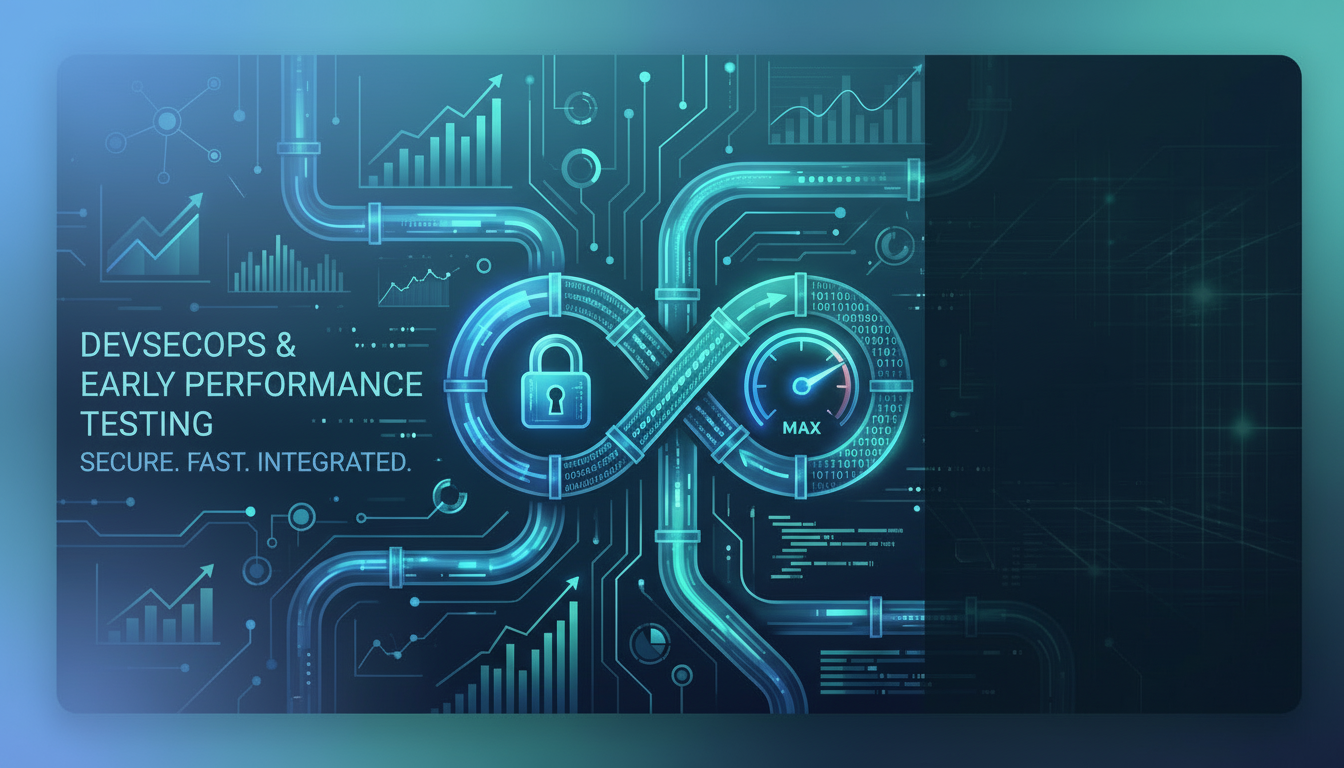
The evolution from DevOps to DevSecOps emphasizes security throughout the software development lifecycle. However, neglecting performance testing in this shift can lead to critical bottlenecks. This post explores how early, integrated performance testing ensures both security and speed for flawless 2026 releases.
From DevOps to DevSecOps: Integrating Performance Testing Early for Flawless Releases
The software development landscape is constantly evolving, with speed and agility being paramount. In 2026, the shift from DevOps to DevSecOps has become a critical imperative, embedding security practices throughout the entire software delivery pipeline.
However, while security takes center stage, the importance of performance testing must not be overlooked. Integrating performance testing early, alongside security checks, is vital for ensuring secure, resilient, and highly responsive applications.
This comprehensive guide explores why early performance testing is non-negotiable in a DevSecOps world and provides actionable strategies for achieving flawless, high-performing releases.
Pro Tip: Don't treat performance testing as a post-development afterthought. Shift it left to identify and resolve issues when they are least costly and most impactful.
The DevSecOps Imperative: Beyond Just Security
DevSecOps extends the collaborative principles of DevOps by integrating security into every phase of the software development lifecycle (SDLC). This means security is no longer a gatekeeper function at the end, but a shared responsibility from planning to production.
The goal is to build security by design, automating security checks and vulnerability scanning within CI/CD pipelines. This proactive approach significantly reduces risks and accelerates the delivery of secure software.
However, a secure application that performs poorly is still an inadequate application. Users expect both robust security and exceptional speed. For more insights into modern testing approaches, browse our software testing blog.
Why Early Performance Testing Matters in DevSecOps
Integrating performance testing early in the DevSecOps pipeline offers a multitude of benefits, preventing costly issues down the line. It's about ensuring the application can handle expected (and unexpected) loads without compromising user experience or security.
Catching Bottlenecks Before Release
Discovering performance bottlenecks in production is incredibly expensive and damaging to user trust. Early performance testing allows teams to identify and address issues like slow database queries, inefficient code, or inadequate infrastructure scaling when they are easier and cheaper to fix.
This 'shift-left' approach aligns perfectly with the DevSecOps philosophy of proactive problem-solving. It prevents last-minute scrambles and ensures a smoother release process.
Ensuring Scalability and Reliability
In 2026, applications are expected to scale dynamically to meet fluctuating demand. Early performance testing, including load and stress testing, validates an application's ability to handle high user concurrency and data volumes without degradation.
This builds confidence in the system's reliability under real-world conditions, minimizing the risk of outages or slow response times that can deter users and impact business.
Optimizing Resource Utilization
Inefficient code or architecture can lead to excessive resource consumption, driving up infrastructure costs, especially in cloud environments. Performance testing helps pinpoint these inefficiencies, enabling optimizations that reduce operational expenses.
This focus on efficiency contributes to a more sustainable and cost-effective application lifecycle, a key concern for engineering managers in 2026.
Strategies for Integrating Performance Testing into DevSecOps
Successfully embedding performance testing requires a strategic approach that involves people, processes, and tools. Here are key strategies to adopt in your DevSecOps pipeline:
1. Define Performance Baselines and KPIs Early
Establish clear performance requirements and metrics (e.g., response times, throughput, resource utilization) during the design and planning phases.
These baselines should be agreed upon by all stakeholders and serve as benchmarks for all subsequent testing.
Consider industry standards and user expectations for your application type.
2. Implement Performance Testing in CI/CD Pipelines
Automate performance tests to run as part of your Continuous Integration/Continuous Delivery (CI/CD) pipeline. This means every code commit or build triggers a set of performance checks.
Tools like TestBots.ai can seamlessly integrate into your existing pipeline, providing rapid feedback on performance regressions. This immediate feedback loop is crucial for the 'shift-left' philosophy.
Pro Tip: Start with micro-performance tests on individual components or APIs. As the application matures, expand to more comprehensive end-to-end scenarios.
3. Leverage Performance Monitoring in Production
Beyond pre-release testing, continuous performance monitoring in production is essential. This allows you to track real-user performance, detect anomalies, and validate the impact of new features or deployments.
Feedback from production monitoring should feed back into the development cycle, informing future performance testing strategies and architectural decisions. According to Ministry of Testing, continuous feedback is key to modern QA.
4. Foster a Performance-Aware Culture
Performance is everyone's responsibility, not just the performance testers. Educate developers on writing efficient code and understanding the performance implications of their architectural choices.
Encourage collaboration between development, operations, security, and QA teams to collectively own the application's performance and security posture. This holistic approach strengthens the entire DevSecOps framework.
Tools and Technologies for Modern Performance Testing
The right tools are crucial for effective, early performance testing. In 2026, cloud-native and AI-powered solutions are leading the charge in making performance testing more accessible and efficient.
Cloud-based Load Testing Platforms: These platforms offer scalable infrastructure to simulate massive user loads without managing dedicated hardware.
APM (Application Performance Monitoring) Tools: Essential for deep visibility into application behavior, identifying bottlenecks at the code or infrastructure level in real-time.
CI/CD Integration Tools: Performance testing tools that integrate seamlessly with Jenkins, GitLab CI, GitHub Actions, etc., are non-negotiable for automation.
AI-powered Test Automation: Platforms like TestBots.ai utilize AI to simplify test creation, maintenance, and analysis, making performance testing more efficient and intelligent. Learn more about our AI-powered solutions.
"Performance is not a feature; it's a fundamental quality attribute. Neglecting it is like building a secure vault with a flimsy door." - Modern QA Axiom, 2026.
Conclusion: Performance as a Pillar of DevSecOps
The journey from DevOps to DevSecOps marks a significant maturation in software development practices. While security rightfully holds a prominent place, true excellence in 2026 demands equal attention to performance.
By integrating performance testing early, continuously, and automatically within your DevSecOps pipeline, teams can deliver applications that are not only secure and reliable but also exceptionally fast and responsive.
Embrace this holistic approach to ensure your software releases are truly flawless, meeting the high expectations of today's users and the rigorous demands of modern business. Ready to elevate your performance testing strategy? Contact TestBots.ai today to see how our platform can revolutionize your DevSecOps pipeline.

Sarah Mitchell
Performance testing expert specializing in large-scale distributed systems. Former lead at a Fortune 500 tech company.