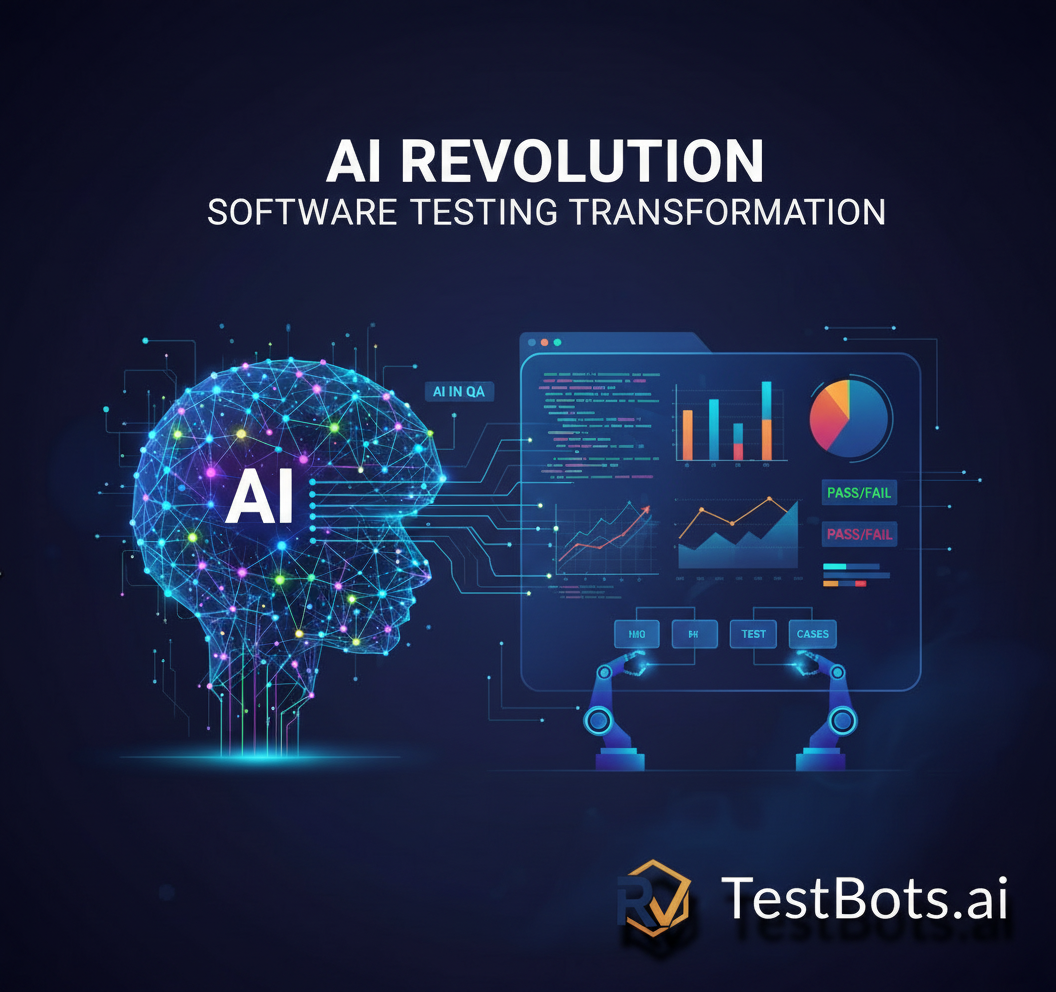
Software quality assurance professionals are increasingly facing pressure to deliver high-quality software faster than ever before., Artificial Intelligence (AI) is no longer a futuristic concept but a vital tool fundamentally transforming software testing. This article delves into the profound impact of AI on QA.
In the rapidly evolving landscape of software development, the demand for faster releases, enhanced quality, and reduced operational costs continues to escalate. For software quality assurance (QA) professionals, this presents a significant challenge. Artificial Intelligence (AI) has moved beyond being a mere buzzword; it's a transformative force reshaping how we approach software testing. This technological revolution isn't just about automation; it's about intelligent automation that learns, adapts, and predicts, leading to unprecedented levels of efficiency and effectiveness in the QA lifecycle. The integration of AI in software testing is a game-changer, addressing critical pain points and paving the way for more robust, reliable, and user-centric applications.
Traditional testing methods, while foundational, often struggle to keep pace with the complexity and speed of modern software development. Manual testing can be time-consuming, prone to human error, and struggle with the vast permutations of user interactions and data. Even conventional automation, while valuable, requires significant effort in script creation and maintenance. This is where AI steps in, offering solutions that augment human capabilities, automate cognitive tasks, and provide insights that were previously unattainable. The impact of AI on software testing is profound, promising to elevate the role of QA from reactive bug detection to proactive quality engineering.
The Dawn of Intelligent Test Automation
One of the most significant ways AI is transforming software testing is through intelligent test automation. This goes far beyond simply executing pre-written scripts. AI-powered tools can analyze application code, user behavior patterns, and historical defect data to generate optimal test cases, prioritize tests, and even self-heal broken scripts.
Consider the sheer volume of test cases required for complex applications. Manually creating and maintaining these can be a monumental task. AI algorithms, particularly those leveraging machine learning, can learn from existing tests and application changes to suggest new test scenarios or modify existing ones. This significantly reduces the manual effort involved in test design and maintenance, allowing testers to focus on more exploratory and nuanced testing activities. According to a ZDNet report, over 60% of enterprise-level software testing will incorporate some form of AI-driven automation, highlighting the rapid adoption of these technologies.
AI-Powered Test Case Generation and Optimization
AI systems can analyze various inputs to generate highly effective test cases. This includes:
- Requirement Analysis: AI can parse natural language requirements documents to identify potential test scenarios and edge cases.
- Code Analysis: By understanding the application's codebase, AI can identify critical paths, potential vulnerabilities, and areas requiring extensive testing.
- User Behavior Analytics: Integrating with analytics tools, AI can pinpoint common user flows and pain points, ensuring test cases reflect real-world usage.
- Historical Defect Data: Learning from past defects, AI can predict areas where bugs are more likely to occur and generate tests to target these high-risk zones.
Furthermore, AI can optimize existing test suites. It can identify redundant tests, suggest merging similar tests, and prioritize tests based on their impact and likelihood of uncovering defects. This ensures that test execution is efficient, focusing resources on the most critical areas. Tools like TestBots.ai's AI Test Studio are at the forefront of this innovation, providing intelligent capabilities for test generation and script healing.
Predictive Analytics and Proactive Quality Assurance
Beyond just finding bugs, AI is empowering QA teams to predict them. Predictive analytics in software testing utilizes machine learning algorithms to analyze vast amounts of data – including code changes, commit history, defect reports, and even developer activity – to identify patterns and forecast potential quality issues before they manifest as actual bugs in production. This shift from reactive bug detection to proactive quality assurance is a monumental leap forward.
Imagine a scenario where a development team is about to push a new feature. An AI system could analyze the code changes, compare them against historical data, and flag certain modules or components as having a high probability of introducing defects. This allows QA teams to target their testing efforts more effectively, preventing issues from reaching later stages of the development cycle, where they are significantly more expensive to fix. The IEEE Computer Society has published numerous studies highlighting the cost savings associated with early defect detection, a benefit greatly amplified by AI.
Leveraging AI for Risk-Based Testing
AI's ability to predict risk allows for a more intelligent approach to risk-based testing. Instead of relying solely on human intuition or predefined risk matrices, AI can dynamically assess the risk profile of different application components based on real-time data. This includes:
- Code Volatility: Identifying modules with frequent changes or high complexity.
- Dependency Analysis: Understanding how changes in one part of the system might impact others.
- Past Defect Density: Highlighting areas that have historically been bug-prone.
- Production Incidents: Learning from issues reported in live environments to prevent recurrence.
By integrating these insights, QA teams can allocate testing resources more strategically, ensuring that the most critical and highest-risk areas receive the most thorough examination. This not only improves product quality but also optimizes testing cycles and reduces time-to-market. For instance, TestBots.ai offers free tools like a Test Effort Estimator that can be further enhanced with AI-driven predictive insights.
The Evolution of Test Oracles and Defect Analysis
One of the perennial challenges in automated testing is the 'oracle problem' – determining whether a test has passed or failed correctly. AI is providing sophisticated solutions to this, moving beyond simple assertion checks to more intelligent evaluation of application behavior. Furthermore, AI is revolutionizing how defects are analyzed, triaged, and resolved.
AI-Enhanced Test Oracles and Visual Regression
AI-powered test oracles can leverage techniques such as:
- Visual Regression Testing: Using computer vision, AI can compare screenshots of application UIs across different builds, identifying subtle visual discrepancies that might indicate a defect or an unintended change. This is far more robust than pixel-by-pixel comparisons, as AI can understand context and ignore minor, acceptable variations.
- Behavioral Anomaly Detection: AI can learn the 'normal' behavior of an application (e.g., response times, resource consumption, data flow) and flag any deviations as potential issues.
- Log Analysis: Machine learning algorithms can process vast system logs to detect unusual patterns or error messages that indicate underlying problems.
This intelligent evaluation reduces false positives and provides more accurate and meaningful feedback to developers. It also significantly reduces the manual effort required to review test results, especially in large-scale test suites.
Smarter Defect Triage and Root Cause Analysis
When a defect is found, AI can assist in several ways:
- Automated Triage: AI can analyze defect reports, stack traces, and test execution data to categorize bugs, assign them to the most relevant development team or individual, and even prioritize them based on impact and severity.
- Root Cause Analysis: By correlating defect occurrences with recent code changes, build versions, and environmental factors, AI can help pinpoint the likely root cause of a defect much faster than manual investigation.
- Duplicate Detection: AI can identify and merge duplicate bug reports, streamlining the defect management process.
This accelerates the fix cycle, leading to faster resolution of issues and a higher quality product. Resources like Ministry of Testing and Google's Testing Blog frequently discuss these advanced applications of AI in QA.
AI's Impact on Performance, Security, and Mobile Testing
AI's influence extends beyond functional testing, permeating specialized areas like performance, security, and mobile application testing, where complexity and scale often pose significant challenges. These domains benefit immensely from AI's ability to process vast datasets and identify subtle patterns.
Intelligent Performance Testing and Load Simulation
In performance testing, AI can:
- Dynamic Workload Modeling: AI can analyze real-world user traffic patterns to create more realistic and dynamic load simulations, adapting to changing user behavior.
- Bottleneck Identification: Machine learning algorithms can sift through performance metrics from various system components to quickly identify performance bottlenecks and suggest optimization areas.
- Predictive Scalability: AI can predict how an application will perform under increasing load, helping organizations proactively scale their infrastructure.
This leads to more robust and scalable applications, preventing costly outages and ensuring a smooth user experience even during peak traffic. TestBots.ai offers free tools like a Performance Testing Checklist that can complement AI-driven strategies.
AI for Enhanced Security Testing
Security testing is another area where AI is making significant strides:
- Vulnerability Detection: AI can analyze code for common vulnerabilities, identify anomalous behavior that might indicate an attack, and even predict potential zero-day exploits based on historical attack data.
- Threat Modeling: AI can assist in building more comprehensive threat models by analyzing application architecture and potential attack vectors.
- Penetration Testing Augmentation: AI can guide ethical hackers by identifying the most probable points of entry or weaknesses in a system, making pen testing more efficient.
Organizations like OWASP continuously update their guidelines, and AI integration is becoming crucial for comprehensive security assurance. TestBots.ai's Security Testing Checklist provides a strong foundation for integrating AI-driven security practices.
Revolutionizing Mobile App Testing with AI
Mobile application testing, with its myriad devices, operating systems, and screen sizes, presents unique challenges. AI is addressing these by:
- Cross-Device Compatibility: AI can intelligently select the most impactful subset of devices for testing, optimizing coverage without exhaustive execution on every single device.
- Exploratory Testing Bots: AI-powered bots can autonomously explore mobile applications, mimicking human interactions and uncovering unexpected bugs.
- Performance on Mobile: AI can analyze battery consumption, network usage, and app responsiveness across various mobile conditions to ensure optimal performance.
This significantly speeds up mobile release cycles while ensuring a consistent and high-quality user experience across the diverse mobile ecosystem. Our Mobile Testing Checklist can help structure your AI-powered mobile testing strategy.
The Future of QA: AI as a Co-Pilot, Not a Replacement
It's crucial to understand that AI in software testing is not about replacing human testers. Instead, it's about augmenting their capabilities, freeing them from repetitive, mundane tasks, and allowing them to focus on more complex, creative, and exploratory testing activities. The role of the QA professional is evolving into that of a 'Quality Engineer' or 'AI-savvy Tester,' skilled in understanding and leveraging these powerful tools.
the collaboration between human intelligence and artificial intelligence will be the cornerstone of effective quality assurance. Testers will be responsible for defining the testing strategy, interpreting AI-generated insights, designing complex scenarios, and conducting exploratory testing that requires human intuition and critical thinking. AI will act as a powerful co-pilot, handling the heavy lifting of data analysis, test generation, execution, and initial defect triage.
"The best use of AI in testing is not to replace human testers, but to empower them to do more strategic and higher-value work. AI handles the drudgery, while humans provide the creativity and critical judgment." - Martin Fowler, Martinfowler.com
This symbiotic relationship will lead to higher quality software, faster release cycles, and ultimately, a more satisfying experience for end-users. The skills required for QA professionals are shifting, with a growing emphasis on data analysis, machine learning fundamentals, and the ability to configure and interpret AI systems. Platforms like ISTQB are already incorporating AI into their certification paths, reflecting this industry-wide shift.
Embracing the AI Future with TestBots.ai
The transformation of software testing by AI is not a distant future; it is the reality . Organizations that embrace AI-powered testing tools will gain a significant competitive advantage, delivering superior software quality at an accelerated pace. From intelligent test generation to predictive analytics and enhanced defect management, AI is reshaping every aspect of the QA landscape.
At TestBots.ai, we are committed to providing cutting-edge AI-powered solutions that empower QA professionals and teams. Our AI Test Studio leverages advanced machine learning to automate test case generation, enable self-healing scripts, and provide deep insights into application quality. Whether you are a solo freelancer managing multiple client projects or a large enterprise seeking to optimize your QA processes, TestBots.ai offers tools designed to integrate seamlessly into your existing workflows.
We believe in a future where testing is smarter, faster, and more efficient. Explore our suite of free tools, dive into our blog for more insights, and discover how TestBots.ai can be your partner in navigating the AI revolution in software testing. The future of quality is intelligent, and it starts now.

Raj Patel
AI/ML testing researcher exploring the intersection of artificial intelligence and software quality assurance.